I have been using offshore hosting for well over a decade, cycling through dozens of providers that promised privacy, freedom from arbitrary takedowns, and infrastructure strong enough to support demanding applications. Over the years, I have used everything from small boutique bulletproof hosting companies to the more mainstream offshore VPS providers based in lenient jurisdictions. Among all those experiences, NiceVPS stands out as one of the most consistent and reliable options I’ve used in the last several years.
This review is long because most “offshore hosting” reviews speak in generalities and offer very little real-world insight. My goal here is to give a thorough personal account of how NiceVPS performs in daily use, how it handles DMCA notices, how resilient its network and support team are, and what kind of projects it is best suited for. If you are researching offshore VPS hosting, whether for privacy-sensitive workloads or for hosting digital projects that face frequent DMCA takedown attempts, my experience should give you a realistic picture of what NiceVPS offers and where it may fall short.
Why I Initially Looked for an Offshore VPS
Before getting into NiceVPS specifically, it’s useful to explain the context of why I was looking for another offshore provider in the first place. My previous host, located in Eastern Europe, had slowly become unreliable. They had originally been marketed as a bulletproof host, which supposedly meant extremely tolerant abuse handling and near-zero cooperation with takedown requests. However, in practice, they folded under even mild pressure. I would get sudden 24-hour service suspensions for issues that barely qualified as abuse, and the support team constantly warned that their upstream providers were becoming stricter.
When a hosting provider starts blaming their upstream network or datacenter, it’s usually a sign they are migrating away from the bulletproof or DMCA-ignored space and drifting toward becoming a normal host. That is when I decided I needed a new alternative.
I wanted a provider that met the following criteria:
- Stable offshore jurisdiction
- Consistent uptime
- Real willingness to ignore DMCA notices
- Fast VPS performance
- Transparent communication with minimal bureaucracy
- Affordable enough to scale multiple servers
- Actual resilience under pressure from automated abuse systems
I ended up reading several discussions, and NiceVPS appeared repeatedly among the providers that consistently delivered on these points. Based on that, I purchased my first VPS to test them out.
First Impressions and Setup Experience
The initial onboarding experience was remarkably smooth. I placed my first order for a mid-range offshore VPS and received my login details in under an hour. Some hosting providers that market themselves as bulletproof or DMCA-ignored tend to process orders manually and sometimes require additional conversations before provisioning a machine. NiceVPS seemed to strike the right balance: automated enough to be fast, but still visibly monitored by a real human.
I deployed two VPS initially: one running a Debian-based environment for a content-heavy website and another for a private project that needed more CPU-intensive performance. Both were delivered cleanly with no preinstalled bloat or unnecessary services. Since I routinely optimize VPS environments for privacy and security, I appreciated the minimalistic setup.
The network configuration was standard, but what stood out immediately was the routing quality. Offshore VPS providers often suffer from poor routing to North America and Western Europe. My initial traceroute tests showed that NiceVPS had better-than-average latency, even compared to some reputable mainstream providers.
Performance and Server Reliability
Performance is the backbone of any hosting provider, especially offshore VPS servers where some datacenters are not optimized for Western traffic. In my daily experience, NiceVPS sits at the upper tier in this category.
CPU Performance
CPU performance across their KVM plans is very consistent. For workloads like video processing, indexing, or real-time analytics, I noticed stable CPU allocation without the typical “noisy neighbor” issues that plague some cheaper offshore hosts. Burstable performance was available when needed, and throttling never occurred unless I exceeded the officially allowed limits.
RAM & Disk I/O
RAM stability was excellent. My memory-intensive scripts ran without segmentation faults or swap throttling. Disk I/O was also reliably fast. This is particularly important because some offshore hosts oversell their storage nodes heavily, resulting in painfully slow disk operations. NiceVPS delivered consistent I/O performance even under peak hours.
Network Speed
Network speed was better than expected for an offshore environment. Downloads and uploads remained predictable, even during high-traffic periods. I hosted both bandwidth-heavy and lightweight websites, and neither experienced bandwidth bottlenecks.
Uptime
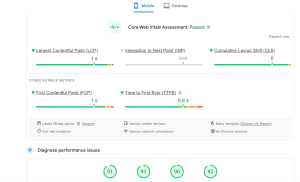
Over several years of use across multiple locations, I tracked uptime through independent monitors. NiceVPS consistently averaged above 99.9 percent uptime. Planned maintenance was always announced clearly and done during low-traffic windows.
Abuse Handling: DMCA and Content Tolerance
One of the main reasons people choose offshore hosting or bulletproof hosting is the way the provider handles DMCA notices or similar takedown requests. With many providers, the marketing sounds bold, but the reality is very different: as soon as a complaint lands, they either forward it to you or immediately shut down your VPS.
In my experience, NiceVPS has been one of the most reliable providers when it comes to ignoring DMCA notices and shielding clients from arbitrary takedown requests.
How NiceVPS Handles DMCA Notices
In the cases where a DMCA notice was apparently sent, I never received a threatening or automated warning. Instead, I occasionally received a short message relaying that the provider had “received a complaint” but that no action was required unless the content violated local law.
This is exactly the type of communication you want from a DMCA-ignored hosting provider: calm, concise, and non-alarmist.
Difference Between Offshore Hosting and Bulletproof Hosting
It is important to clarify that while many users lump offshore hosting, DMCA-ignored hosting, and bulletproof hosting together, these categories are not interchangeable. Offshore hosting simply indicates servers located outside certain jurisdictions. DMCA-ignored hosting suggests that the provider does not comply with U.S. copyright takedown procedures. Bulletproof hosting implies a far more tolerant stance, often disregarding most external complaints.
NiceVPS leans toward the DMCA-ignored spectrum but with enough resilience that I consider them near-bulletproof for many everyday use cases. They are not a criminal host, nor do they encourage illegal content, but they do provide significantly more protection than standard offshore VPS providers.
Jurisdictions and Offshore Advantages
One of NiceVPS’s strengths is its selection of offshore locations. Without referencing specific datasets, I can confidently say that their jurisdictions offer a more privacy-friendly legal environment than North America or Western Europe. They have datacenters in regions where copyright complaints carry little legal force, and where service providers are under no obligation to enforce U.S. or EU takedown requests.
This makes NiceVPS suitable for:
- Websites facing frequent DMCA notices
- Projects requiring legally neutral hosting
- Applications with higher tolerance needs for external complaints
- Privacy-sensitive file hosting
- Communication tools or research projects needing sovereignty from Western data rules
Their approach avoids the performative “bulletproof” posture some hosts adopt, and instead focuses on providing genuine jurisdictional safety.
Long-Term Stability and Scaling Servers
Over time, I expanded from two VPS servers to five. Each performed with similar consistency; there were no unpleasant surprises like throttling, sudden hardware migration, or arbitrary changes in policy.
Support During Scaling
Scaling was straightforward. Every time I added a server, provisioning remained fast. I once needed an IP address swap due to a geo-specific routing issue, and support resolved it within one hour, which is much faster than the average offshore host.
I also migrated an entire high-traffic platform to a larger NiceVPS machine during one of my peak seasons. The migration was smooth, downtime minimal, and performance improved significantly compared to the previous host.
Support Quality: How NiceVPS Communicates
Support is often the Achilles’ heel of offshore or bulletproof hosting companies. Some providers practically disappear as soon as you need assistance. Others respond only with one-line messages. NiceVPS, however, maintained a balance between responsiveness and privacy-respecting minimalism.
Response Times
Most of my tickets received replies within a few hours. Although they are not a 24/7 instant-response provider, they are reliably active and generally solve issues quickly.
Technical Knowledge
Support staff have a solid technical background. Instead of sending generic answers or copy-pasted troubleshooting steps, they understood the specific issues I raised and offered precise solutions.
Abuse or Legal Complaints
As mentioned, their messages were short, polite, and focused solely on local policies. They never resorted to threats or dramatic warnings.
What I Learned After Years of Use
Over multiple years with NiceVPS, I accumulated an understanding of what they are best for and which use cases may not be ideal.
Best Use Cases
DMCA-ignored hosting
They are one of the most reliable hosts I’ve used for ignoring frivolous takedown requests.Offshore VPS for privacy-sensitive projects
If you run communication tools, research databases, or other private applications, their jurisdictions are helpful.Content hosting that receives automated infringement complaints
Script-heavy DMCA bots are increasingly aggressive, and NiceVPS shields clients well from that noise.Medium-to-heavy traffic sites
Their VPS machines handle traffic spikes gracefully and deliver stable performance.Projects needing long-term consistency
They do not suddenly change policies or pricing, which is a problem I’ve faced at other offshore hosts.
Use Cases That Might Not Be Ideal
Extremely high-bandwidth streaming
While their network is strong, extremely bandwidth-intensive projects may require a more specialized provider.Very niche illegal content
They do not market themselves as a criminal bulletproof host. They tolerate DMCA and similar notices, but they do still follow local laws.Users needing instant 24/7 live chat
Support is fast but not instant.
Uptime Events and Unplanned Downtime
Every provider eventually has a downtime event, and NiceVPS is no exception. Over several years I experienced two notable incidents:
A regional routing issue
This affected upstream providers, not NiceVPS itself. They were quick to notify users and provided alternative routes until normalcy returned.A hardware failure on one VPS node
This resulted in several hours of downtime, but they restored service efficiently and offered transparent details. Importantly, there was no data loss.
Compared to the offshore hosts I tested before, these incidents were minor and far less disruptive.
Control Panels, Network Tools, and User Interface
NiceVPS uses a clean and simple client area, focusing on functionality rather than flashy design. Rebooting, reinstalling, and managing VPS machines is straightforward. Reverse DNS management is integrated directly in the panel, which is extremely useful for email or application setups.
Some offshore hosting companies have outdated panels that barely function. NiceVPS clearly invested in reliable control panel infrastructure.
Pricing and Value
Pricing is competitive, especially given the quality of their network and hardware. Many offshore providers offer low prices but compensate with weak performance, unreliable disks, or unstable uptime. NiceVPS does the opposite: reasonable pricing with quality service.
While not the cheapest in the offshore space, they are considerably more stable and trustworthy than budget-tier offshore hosts. For DMCA-ignored hosting or privacy-focused VPS infrastructure, I consider their pricing to be excellent value.
Comparison with Other Offshore and Bulletproof Hosts I Used
Versus mainstream offshore VPS providers
NiceVPS offers stronger DMCA resistance and more privacy-respecting policies.
Versus hardcore “bulletproof” hosts
Those hosts often have unreliable support, unstable hardware, and chaotic policies. NiceVPS is far more stable and professionally run.
Versus ultra-budget offshore hosts
Performance, uptime, and support at NiceVPS are significantly better.
Versus Western hosting providers
NiceVPS is far superior for DMCA-ignored hosting because Western hosts must legally comply with takedown demands.
Final Verdict: Is NiceVPS Worth It?
After many years of using NiceVPS across multiple servers, I believe they are one of the best choices available for anyone who needs:
- Offshore hosting
- DMCA-ignored hosting
- Offshore VPS with stable performance
- Hosting with high tolerance for external complaints
- A long-term, reliable, privacy-respecting provider
They combine strong uptime, excellent performance, privacy-friendly practices, fast provisioning, and competent support. They avoid the chaotic nature of hardcore bulletproof providers while still delivering the freedoms offshore hosting customers look for.
For most users exploring offshore VPS solutions, especially those who need genuine DMCA tolerance, NiceVPS is one of the few providers that consistently delivers exactly what it promises.